
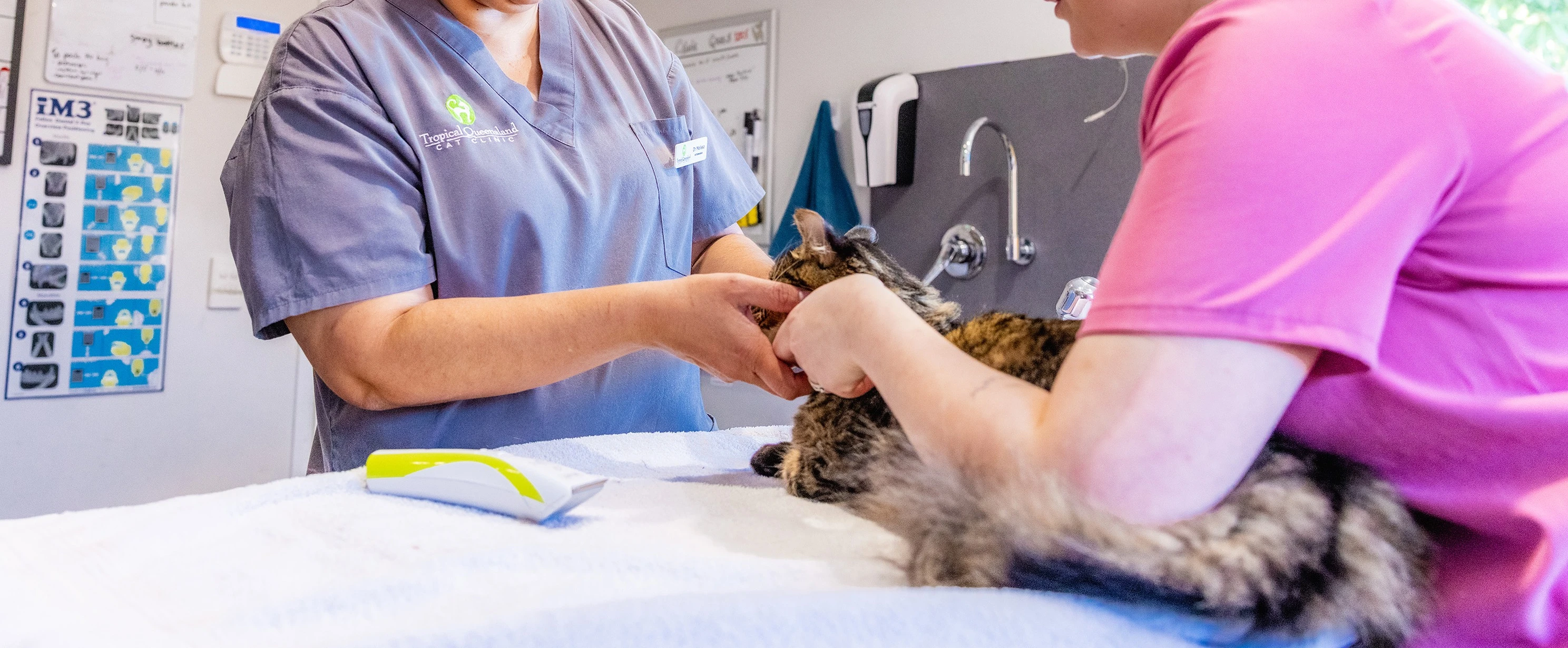
Dental Checks & Cleaning
Dental disease is extremely common in middle-aged and older cats and can have a significant impact on their comfort and overall health. Over time, plaque and tartar accumulate on the teeth, leading to irritation and inflammation of the gums. As the disease progresses, the gums may recede, exposing the tooth roots and increasing the risk of loose teeth, pain, and infection.
Cats are also commonly affected by feline odontoclastic resorptive lesions (FORLs), a painful condition in which part of the tooth structure is gradually broken down and absorbed by the body. The exact cause of FORLs is still unknown, but the condition can cause considerable discomfort and often requires veterinary treatment or extraction of affected teeth.
Signs of dental disease in cats can be subtle but may include favouring one side of the mouth when eating, difficulty or reluctance to chew, bad breath, drooling, jaw chattering when a painful area is touched, or visible swelling around the jaw or face. Any of these symptoms should prompt a veterinary examination, as dental pain is often more severe than it appears.
Preventative dental care can significantly reduce the risk of disease progression. While regular tooth brushing is the most effective method, it can be difficult to maintain in many cats. Alternative options include veterinary-approved dental diets, oral hygiene products, and dental treats designed to help reduce plaque and tartar build-up. Regular dental check-ups with your veterinarian are also essential for early detection and treatment.

Townsville City QLD 4810 07 4772 2500 [email protected]
Mon-Thu 8:00am-6:00pm
Friday 8:00am-5:00pm
Saturday 9:00am-1:00pm
Sunday Closed